
Caring for Antique and Vintage Glass

Antique and vintage glass has a quiet beauty that modern pieces rarely replicate. Whether it’s delicate Depression glass, hand-blown European crystal, or softly worn mid-century pieces, older glass carries both craftsmanship and history. With a little gentle care, these pieces can remain just as beautiful today as when they were first made.
Unlike modern glassware, antique and vintage glass benefits from a lighter touch. Preserving its character is less about polishing and more about thoughtful handling.
A Gentle Approach Matters
The most important principle when caring for antique and vintage glass is simple: treat it gently.
Older glass was often made using traditional methods, which means slight variations in thickness and structure are common. These subtle differences are part of its charm, but they also mean that sudden temperature changes and harsh handling can cause stress over time.
Approaching antique glass with calm, steady care helps preserve both its strength and its story.
Washing with Care
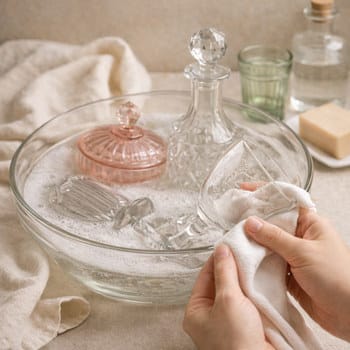
When cleaning antique and vintage glass, hand washing is always the safest option. Lukewarm water and a mild detergent are usually all that is needed.
Avoid extremes of temperature. Rapid shifts — such as hot water followed by cold rinsing — can create internal stress that may not be visible immediately but can weaken the piece over time.
A soft cloth or microfibre towel is ideal for drying. Gentle drying prevents water marks while reducing the chance of accidental knocks that can happen during air drying.
Mindful Handling
Many antique and vintage glass pieces feature delicate stems, handles, or applied details. Supporting the bowl or base rather than lifting by finer elements helps reduce strain on vulnerable joins.
These small habits make a meaningful difference over time, particularly for pieces that are already decades old.
Handling antique glass with intention allows it to remain both functional and beautiful.
Decorative Finishes
Some antique and vintage glass includes gilt rims, hand-painted details, or light etching. These decorative elements are often more fragile than the glass itself.
A soft wipe is usually enough to keep these details clean. Avoid abrasive cloths or vigorous rubbing, as over-cleaning can wear away finishes that have survived for generations.
Preservation, rather than perfection, is always the goal.
Storing and Displaying Glass
How antique glass is stored can be just as important as how it is cleaned. Avoid stacking delicate pieces where possible, especially those with fine rims.
If stacking is necessary, placing a soft cloth or tissue between items helps protect surfaces. Display cabinets should be stable and positioned away from strong vibrations or prolonged direct sunlight.
Creating a calm environment allows antique glass to age gracefully.
Living with Antique Glass
Perhaps the most important thing to remember is that antique and vintage glass was made to be used and enjoyed. These pieces were once part of everyday life, and they can still bring beauty to modern homes.
Small signs of age — a softened edge, a faint surface mark — are not flaws. They are part of the journey each piece has taken.
Caring for antique glass is not about making it look new, but about allowing it to continue its story with quiet dignity.
If you’d like to explore carefully chosen antique and vintage glassware, you can browse the Marple Antiques collection here:
https://marpleantiques.com.au/antiquevintageglassware/